

National Student Conference in Fusion Engineering
Tuesday 7–Wednesday 8 July 2026
The University of Sheffield
Developing the future voices of fusion engineering
We are very pleased to host a new National Student Conference in Fusion Engineering, which aims to give postgraduate researchers the opportunity to hone their talents at presenting in a warm and welcoming environment. It's a great chance to network with peers, industry professionals, and academics within the fusion sector. Postgraduate students may submit an abstract to present for 10 or 15 minutes, or give a flash presentation with a poster, depending on their year of their doctoral research programme.
Open to undergraduates: If you’re currently an undergraduate student that would like the opportunity to explore both PhD and industrial opportunities in fusion engineering, use our free afternoon ticket option to register. We will offer a maximum of 30 undergraduate tickets.
Conference Location:
The Edge, Endcliffe Village, University of Sheffield, S10 3ED
Call for Abstracts is now closed
We welcome abstracts from postgraduate researchers from across UK and international institutions, in any year of their PhD, in a topic that is relevant to the engineering challenges for delivery of fusion energy.
Suitable topics will be relevant to the design, build, operation, maintenance and decommissioning of a fusion energy power plant, and includes broader topics such as community, communication and supply chain themes. We therefore welcome abstracts in topics across Engineering, Science, Communications and Mathematical disciplines.
We will offer a maximum of 30 presentation places.
Please note that if accepted, you agree to register for the conference using the free ‘Presenters’ option. You will also be given a voucher for wood-fired pizza at the end of the conference Day 1 in Sheffield’s Botanical Gardens. Authors will need to arrange any travel and accommodation requirements themselves.
Registration is now closed
Registration is now closed.
Conference programme
Day One — Tuesday 7 July
9am–5pm
Four themed presentation sessions, including four keynote speakers.
6pm–8pm
Wood-fired pizza evening at Sheffield Botanical Gardens
Day Two — Wednesday 8 July
9am–5pm
Four themed presentation sessions, including four keynote speakers. Prize awards for best presentations
7:30pm–11pm
Conference Dinner at The Mowbray
Speakers
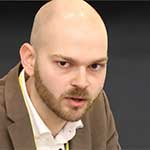
Simone Carusotti, Assistant Professor in Electrical and Nuclear Fusion Engineering, University of Tuscia
Topic: The TRUST tokamak: building a university-based fusion engineering project, from scientific vision to design realisation
Dr. Simone Carusotti is an Assistant Professor in Electrical and Nuclear Fusion Engineering at the University of Tuscia (UNITUS), Italy, within the Department of Economics, Engineering, Society and Business Organization (DEIM). His research focuses on the design and development of engineering systems for tokamaks and fusion-energy applications, including electromagnetic and structural modelling, high-temperature superconducting coil design, magnetic diagnostics, and experimental infrastructure. He is the coordinator of the TRUST project, a university-based tokamak initiative dedicated to fusion engineering research, education, and experimental development. He has also contributed to the EUROfusion programme and is actively involved in teaching and thesis supervision in nuclear fusion technologies at UNITUS.

Hugo Doyle. Head of Experimental Physics, First Light Fusion
Topic: An introduction to Inertial Fusion Energy and First Light Fusion
Hugo Doyle is Head of Experimental Physics at First Light Fusion, the UK's privately funded inertial fusion energy company. He has worked there for 12 years and has a background in high energy laser physics.
He will present the history of inertial fusion research including the recent achievement of Gain at the National Ignition Facility in California. This has led to a massive increase in private funding for inertial fusion energy and a growth of, well funded, start-up companies around the world.
We will talk through First Light's end to end reactor scheme, FLARE, and the engineering challenges - including the similarities and differences with magnetic fusion.

Sehila Gonzalez de Vicente. Global Director, Fusion Energy at Clean Air Task Force
Topic: Fusion Energy: Industry Status and Critical Gaps to Commercialization
Sehila M. Gonzalez de Vicente holds a PhD in Materials Physics from the Universidad Complutense de Madrid (Spain) and an MBA from the EOI Business School. She has 20 years of experience in fusion technologies, policy, and economic aspects. She is currently the Global Director of the Fusion Energy programme at Clean Air Task Force. Previously, she worked at the International Atomic Energy Agency as a Nuclear Fusion Physicist in charge of fusion activities for more than eight years. Before joining the IAEA, she was the responsible officer of the Fusion Materials Development Programme at EFDA (European Fusion Development Agreement) / Eurofusion in Garching bei München (Germany).
In addition, she is vice chair of the Karlsruhe Institute of Technology (KIT) Scientific Advisory Board in the research field of Energy, a member of the UK’s Fusion Technical Advisory Group, and a member of the IFMIF-DONES España Technical Advisory Committee. She served as chair of the Project Committee of the International Fusion Energy Research Centre (IFERC) project between Europe and Japan and chaired the 9th Annual Assessment of Fusion for Energy, among other committees. She is co-editor and a contributing author of the book Fundamentals of Magnetic Fusion Technology. She is also the Chair of the Women in Fusion Group.
She is the author of more than 40 peer-reviewed publications in the field and a contributing author to the following books: Fundamentals of Magnetic Fusion Technology and Considerations for Commercialization Strategies for Fusion Energy.

Allan Harte. Head of Research for the Technology Portfolio, UK Atomic Energy Authority (UKAEA)
Topic: Simulation-led experimental design for UKAEA’s Technology Programme
Dr Allan Harte is the Head of Research for the Technology Portfolio at the UK Atomic Energy Authority (UKAEA), where he leads multidisciplinary research programmes in Materials and Manufacturing Qualification, Thermal Hydraulics, Nuclear Analysis and Radiometrics, Magnet Technology and Whole Plant Design.
He is a well-known expert in diagnostics for measurement in extreme environments, radiation effects and material characterisation, and he is the Principal Investigator for UKAEA’s Ultra-High Temperature Testing platform. Dr. Harte has more than 15 years’ experience in developing physical-digital interface tools for fission and fusion materials and their components, driving industry codes standards for novel applications.
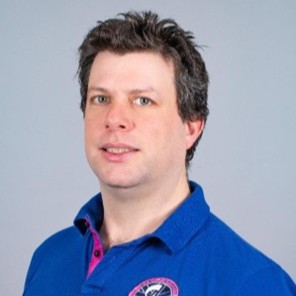
Simon Kirk. Design Integration Lead, UK Fusion Energy Ltd
Topic: The role of academic research in delivering the STEP Fusion Powerplant
Simon Kirk has had a 12-year career in magnetic confinement fusion spanning five different tokamak programmes (JET, ITER, EU-DEMO, MAST-U & STEP) and across the full engineering lifecycle (R&D, concept design, manufacturing, operations and decommissioning). He joined the UK Atomic Energy Authority after completing a PhD in experimental physics. His career included a 3-year Eurofusion Fellowship developing EU-DEMO robotic laser cutting and welding pipe tools which he was subsequently awarded 2nd place in 2018 European Prize for Innovation in Fusion Research. After this he worked with academic and industrial partners on various research projects developing novel manufacturing techniques for fusion components. He joined the STEP programme in its founding year and lead the design of the first wall and shielding components. In his current role as Design Integration Lead for the STEP vacuum vessel and in-vessel systems, he co-leads the design teams and technology development programmes on plasma facing components, shielding, breeder blankets and vacuum vessel for the STEP Fusion Powerplant.

Samara Levine. Materials Irradiation Science and Technology Manager, UK Fusion Energy Ltd
Topic: Engineering for the radiation environment of the STEP Fusion Powerplant
Samara Levine has been working in the field of nuclear materials for 10 years and has experience with irradiation testing in both materials test reactors and by proxy ion irradiations. She was a U.S. Department of Energy Nuclear Energy University Program (NEUP) fellow at the University of Michigan, where she worked on material degradation concerns for the lifetime extension of fission light water reactors at the Michigan Ion Beam Laboratory, and, subsequently, a Graduate Advancement Training and Education (GATE) fellow at the University of Tennessee and Oak Ridge National Laboratory where she focused on neutron irradiation effects in fusion structural steels. Following her PhD in nuclear engineering, she joined Tokamak Energy as an Irradiation Damage Specialist and was the materials subject matter expert for their U.S. Fusion Pilot Plant programme where she supported in-vessel component design. In her current role as Materials Irradiation Science and Technology Manager, she leads the materials irradiation strategy to ensure delivery of irradiated property and performance data to support the STEP Fusion Powerplant design.